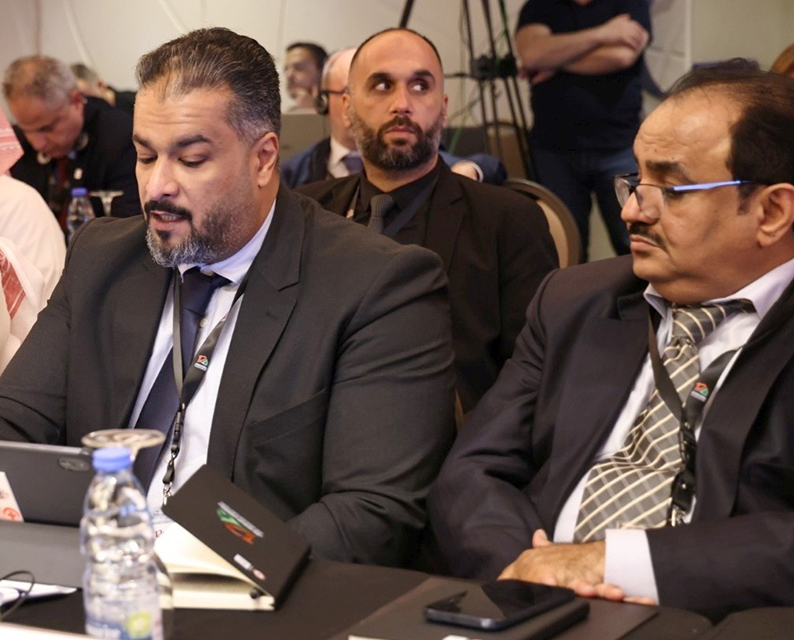
The Kuwait Red Crescent Society (KRCS) is strengthening its national emergency preparedness, expanding humanitarian partnerships and enhancing its international presence in line with Kuwait’s longstanding humanitarian approach, Vice Chairman Prof Dr Nasser Al-Tannak said. Speaking to KUNA during the 12th Regional Conference of Red Cross and Red Crescent Societies in the Middle East and North Africa, hosted in Beirut, Al-Tannak said KRCS participates in the regional meeting to strengthen cooperation with humanitarian partners, exchange expertise and coordinate efforts to improve relief services, particularly during emergencies and difficult circumstances.
He said the society remains active in meetings of the International Federation of Red Cross and Red Crescent Societies, the Arab Red Crescent and Red Cross Organization and other humanitarian forums, while exchanging expertise with sister national societies and supporting joint efforts in disaster response, volunteering, humanitarian financing and capacity building. In a presentation during the conference, Al-Tannak reviewed KRCS activities over the past two years, highlighting efforts to maintain its humanitarian and relief operations abroad while strengthening national preparedness and developing its institutional framework in line with the principles of the International Red Cross and Red Crescent Movement. He said the society continued responding to crises and disasters in several countries, with priority given to the most affected and vulnerable communities, particularly in the occupied Palestinian territories. KRCS intensified support for people in Gaza through relief campaigns, emergency aid and air and land bridges established in coordination with official authorities and sister national societies. Its activities have included projects in healthcare, shelter, water and sanitation, education and direct relief. The society has also continued providing medical and relief assistance, as well as health and social projects, in several Asian and African countries in cooperation with national societies and specialized humanitarian organizations
He said the society remains active in meetings of the International Federation of Red Cross and Red Crescent Societies, the Arab Red Crescent and Red Cross Organization and other
humanitarian forums, while exchanging expertise with sister national societies and supporting joint efforts in disaster response, volunteering, humanitarian financing and capacity building. In a presentation during the conference, Al-Tannak reviewed KRCS activities over the past two years, highlighting efforts to maintain its humanitarian and relief operations abroad while strengthening national preparedness and developing its institutional framework in line with the principles of the International Red Cross and Red Crescent Movement. He said the society continued responding to crises and disasters in several countries, with priority given to the most affected and vulnerable communities, particularly in the occupied Palestinian territories. KRCS intensified support for people in Gaza through relief campaigns, emergency aid and air and land bridges established in coordination with official authorities and sister national societies. Its activities have included projects in healthcare, shelter, water and sanitation, education and direct relief. The society has also continued providing medical and relief assistance, as well as health and social projects, in several Asian and African countries in cooperation with national societies and specialized humanitarian organizations response. These efforts included recruiting and selecting more than 100 volunteers, organizing teams to operate in shifts and activating specialized teams in first aid, field response and disaster management. Al-Tannak said KRCS also continued social and humanitarian programs supporting vulnerable families and groups in Kuwait, including food, education and healthcare assistance. At the same time, it has worked to strengthen regulatory and oversight mechanisms governing aid distribution to ensure fairness and transparency, preserve beneficiaries’ dignity and ensure donations reach their intended recipients.