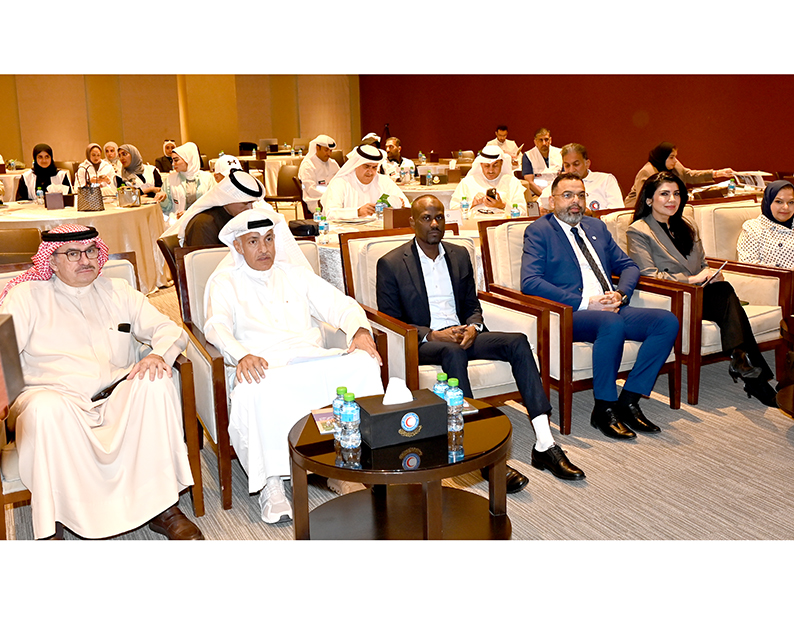
The Kuwait Red Crescent Society (KRCS) affirmed today that advance preparedness, effective planning and building the capacities of human resources are fundamental pillars for reducing disaster risk, enhancing the efficiency of response to crises and emergencies, and protecting lives and property.
Speaking at the opening of a workshop titled “Disaster Preparedness and Management for an Effective Response,” organized by the Society in cooperation with the International Committee of the Red Cross (ICRC) and running for three days, KRCS Board Member Youssef Al-Zaben said that humanitarian response does not begin when a disaster strikes; rather, it is preceded by stages of planning, training and raising readiness to ensure a swift response to its consequences.
Al-Zaben stressed the importance of drawing on the workshop’s outcomes to establish a culture of preventive action and advance planning, and to develop the capacities of field teams, in support of building a more efficient and effective humanitarian response system to tackle disasters and crises.
He added that the Society attaches great importance to training its staff and volunteers and developing their field capabilities, considering the human element the foundation of the humanitarian response system. He stressed that training and the exchange of expertise strengthen teams’ ability to deal with exceptional circumstances and make appropriate decisions.
For his part, Hassan Idris, Head of the Cooperation Department at the International Committee of the Red Cross, said that the ICRC’s participation in organizing the workshop comes within the framework of its cooperation with the Kuwait Red Crescent Society to exchange technical expertise and strengthen the readiness of humanitarian personnel to deal with disasters and emergencies.